The Route

The Journey

Gallup, New Mexico to Boston, Massachusetts. A passage read as a map, drawn as a memory.

GALLUP, NM35.53°N · 108.74°WCHICAGO, IL41.88°N · 87.63°WBOSTON, MA42.36°N · 71.06°W

Gallup, New Mexico → Chicago → Boston, Massachusetts

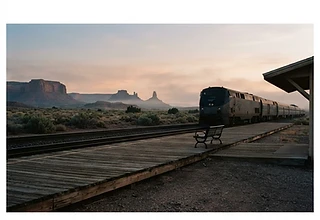
Gallup, New Mexico
01Origin

Gallup, New Mexico

35.5281° N, 108.7419° W

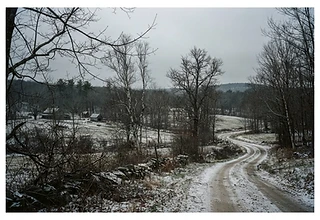
The journey begins in the high desert of New Mexico.

Aboard
02Aboard

In transit

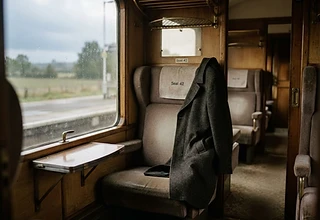
Inside the train. Strangers settle into seats they will soon leave. The landscape begins to pass.

Passage
03Passage

In transit

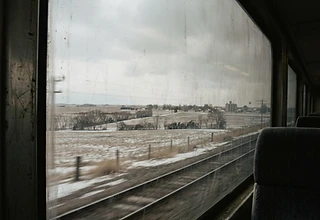
The country flattens. Fields, small towns, crossings. Distance measured in the passing of light.

Night
04Night

In transit

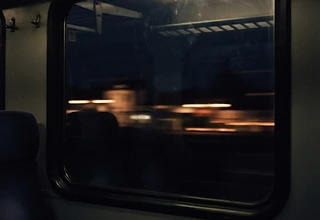
Darkness falls. The window turns inward. The train keeps its own time through the hours.

Chicago, Illinois
05Layover

Chicago, Illinois

41.88° N, 87.63° W

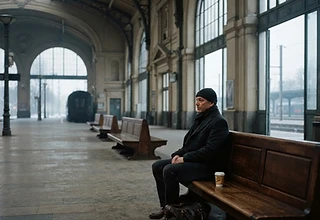
A layover in Chicago. He steps down from one train and waits for another. The station fills and empties around him. He carries the hours he has not yet named.

Approach
06Approach

In transit

The landscape turns cold and bare. The East announces itself slowly.

Boston, Massachusetts
07Destination

Boston, Massachusetts

42.3601° N, 71.0589° W

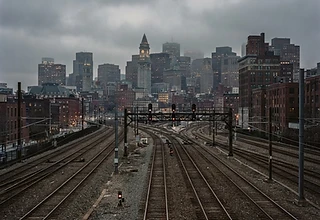
Boston. Arrival, but not resolution.

Intermediate Stops

Additional waypoints will be added as the route is confirmed by the author.

Passengers

Those He Meets Along the Way

The strangers who enter and leave the journey — each a brief encounter across two days and thousands of miles.

The Woman on the Platform

Gallup, New Mexico — Platform

The Woman on the Platform

Chapter One · Unnamed

A stranger who borrows a cigarette and leaves something behind.

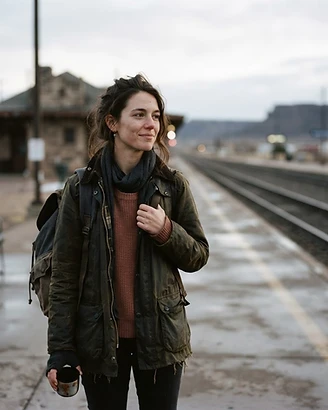
She appeared out of the cold before the train did. She bummed a cigarette, told him about Albuquerque — the apartment, the roommate, the boyfriend, the order things fell apart. She laughed at herself the way people do when the alternative is worse. When she saw the collar, her expression shifted — not dramatically, just enough. “Well shit,” she said. “I guess that counts as my confession.” He told her it was one of the better ones he’d heard. She turned back once at the door of the train and lifted her hand. He watched until she was gone.

Cort

The Dining Car — Over New Mexico

Cort

The Dining Car · Albuquerque

A retired father on his way to Chicago to see a daughter who stopped calling.

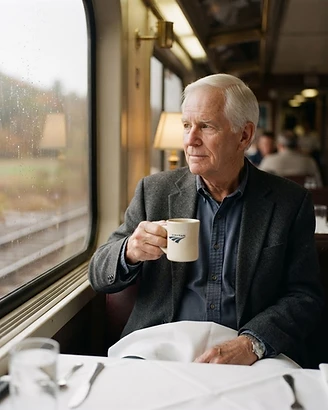
He was already seated when the priest arrived, napkin in his lap, coffee in hand. He introduced himself as Cort. He was headed to Chicago to see his daughter — she lived there with her mother, his second ex-wife. He said he was a good father. He just wasn’t perfect, he guessed. The priest told him that being a good father and being a present one aren’t always the same thing. Cort looked at him, uncertain whether he was being challenged or understood. When they parted on the platform at Albuquerque, Cort paused just long enough. “It’s good not to eat alone,” the priest said. “Yeah,” Cort replied quietly. “It is.”

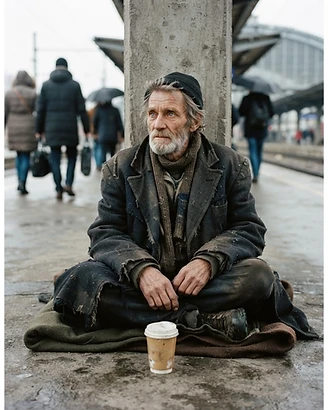
The Man on the Platform

Albuquerque, New Mexico — Platform

The Man on the Platform

Unnamed

A man sitting beside a concrete pillar, waiting for something he can’t name.

He was near the far end of the platform, seated on a blanket beside a concrete pillar. Everyone else moved past him with purpose. The priest didn’t go to him right away — he watched first. When he finally knelt beside him, the man looked up. His eyes were clear. “You waiting on someone?” the priest asked. “Aren’t we all,” the man said. He told the priest that people don’t usually stop. The priest told him that sometimes they do. When the train called, the priest stood and nodded and walked back along the platform. He paused once at the door of his car and turned back. The man hadn’t moved. He was still watching.

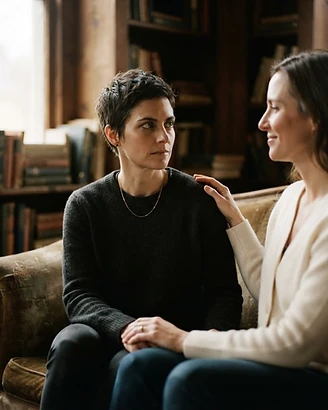
Kate

The Dining Car — Over Kansas

Kate

The Dining Car · Over Kansas

A high school English teacher who stopped praying when she realized she was only asking God to make her different.

She noticed the collar first and said so — “I get nervous around men in collars. It’s a reflex.” She teaches high school English, which she said probably explains a lot, including why she doesn’t trust anyone who sounds certain. She watched the priest carefully throughout lunch, deciding whether he was real. When Laura told him her parents didn’t know about them, Kate went quiet. Then she told him something she hadn’t told Laura — that she used to pray every night as a child, and stopped when she realized she was only ever asking God to make her different. When He didn’t, she figured that was her answer. The priest said he was sorry. Not as apology. As recognition. Before she left, she told him it was nice not being afraid of him. He said that made two of them.

Laura

The Dining Car — Over Kansas

Laura

The Dining Car · Over Kansas

A nurse who still gets birthday cards from parents who no longer ask about her life.

She introduced herself first and apologized for Kate second, in the easy way of someone who has been doing both for a long time. She is a nurse. She sat close to Kate throughout lunch, their knees nearly touching. Midway through the meal she said something she hadn’t planned to say — that her parents didn’t know about them. That they were church people. That she still got birthday cards and Christmas cards, but they had stopped asking about her life. She said she kept thinking maybe one day she’d say something right and they’d let her back in, like a test she kept failing. The priest told her love isn’t a test. If it were, none of us would pass. She let out a breath she didn’t know she’d been holding. When they left, she touched his arm. Just once. Thank you, she said.

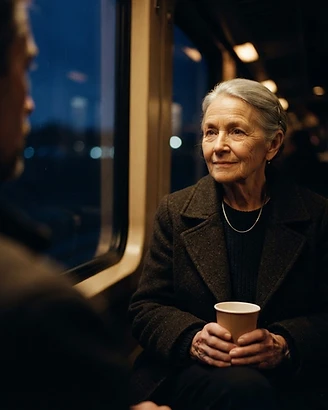
The Woman in the Viewing Car

The Viewing Car — Overnight

The Woman in the Viewing Car

Unnamed

An older woman who sat down beside him and asked how he was — and waited for the real answer.

She asked if she could sit beside him. She held her cup in both hands and looked out at the stars and said nothing for a long time. Then she turned and asked, simply: “How are you, Father?” — not in the way people do when they expect the answer they can handle. She waited. He said he was tired. She said tired can mean a lot of things. He told her he used to be able to carry it. She stayed beside him as if staying were its own kind of answer. When he took out the photograph, she asked if she could hold it. She looked at it carefully and said: “She has her daddy’s eyes.” When he said he wasn’t there the way he should have been, she listened without rescuing him. When he finished, she told him he didn’t have to do anything with it tonight. He just had to let it be true. Before she left, she said: “You did the best you could.” Not as reassurance. As recognition.